Latest from AIforE
Updates, research notes, and press from the AI for Ecology team.
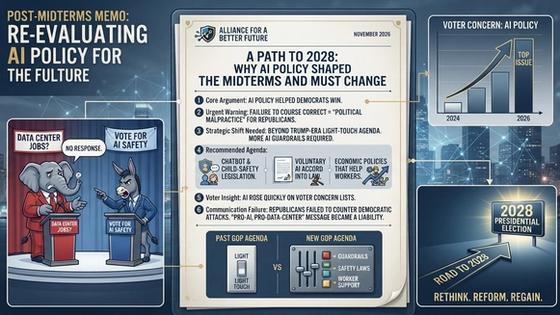
Conservative AI Group Warns Republicans After Midterms: AI and Data Centers Cost Votes
A conservative AI policy group says AI helped Democrats win the midterms and urges Republicans to back more guardrails. AIforE's take: voters want proof that AI and data centers serve their communities.
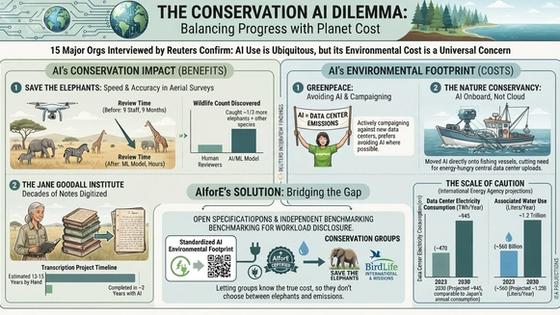
Conservation Groups Are Using AI. They're Also Worried About Its Footprint.
Reuters surveyed 15 major conservation groups and found all of them rely on AI, from elephant surveys to chimp field notes — and all of them are wary of its energy and water costs.
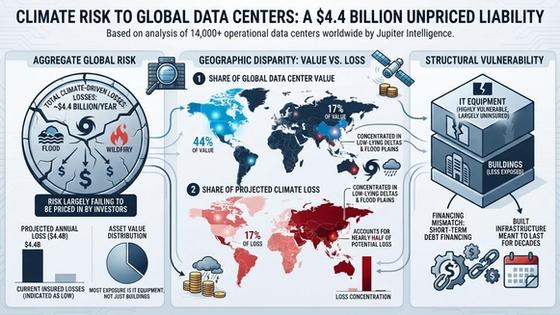
Data Centers Face Billions in Unpriced Climate Risk, Report Finds
A new risk-analytics report finds the world's data centers face roughly $4.4B a year in climate losses that investors aren't pricing in, with China bearing a disproportionate share of the exposure.
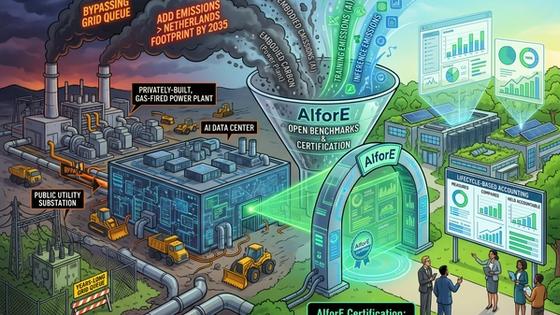
AI Boom's New Shortcut: Skip the Grid, Build a Gas Plant Volunteer Accountability
Data center developers are skipping years-long grid queues by building their own gas-fired power plants — a shortcut that could add emissions bigger than the Netherlands' footprint by 2035.
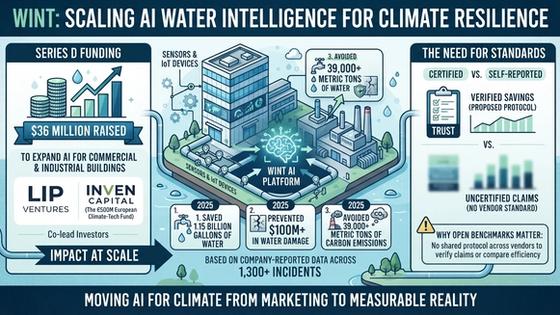
AI Water-Intelligence Startup Wint Raises $36M as Climate Investors Bet on Quiet Efficiency Tech
AI water-intelligence startup Wint raised $36M as climate investors bet on quiet efficiency tech — the kind of measurable AI impact AIforE's benchmarks aim to verify and reward.
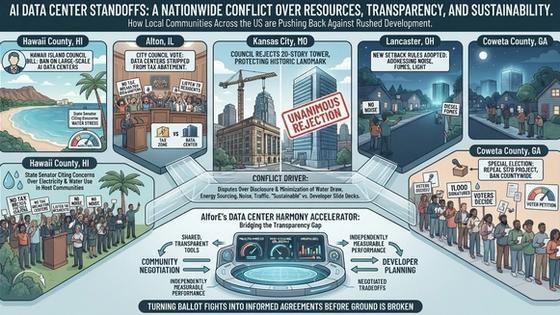
Hawaii to Georgia, Communities Fight Data Centers - Harmony is Needed Now
Six U.S. communities took action against AI data center projects this week - bans, a rejected tower, and a $17B project facing a repeal vote. AIforE's take: these fights need shared, verifiable numbers, not standoffs.
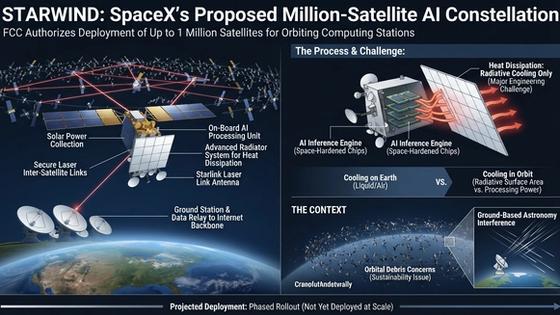
SpaceX Wins FCC Approval to Build a Million-Satellite AI Data Center Network
The FCC approved SpaceX's Starmind network of up to 1 million orbital AI satellites. AIforE's take: solar power beyond the grid still needs the same open lifecycle accounting as any data center on the ground.
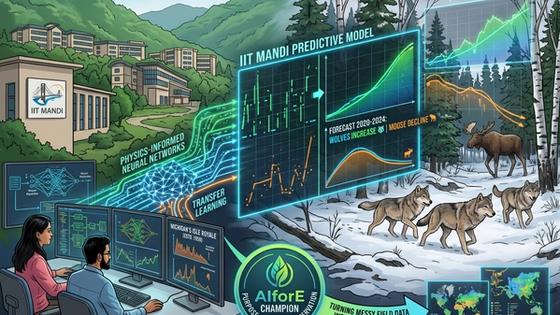
AI Model Forecasts Wildlife Population Swings Years Before They Happen
IIT Mandi researchers built a self-adaptive AI model that forecasts predator-prey population shifts up to five years out — tested on Isle Royale's wolves and moose, one of the longest wildlife records on Earth.
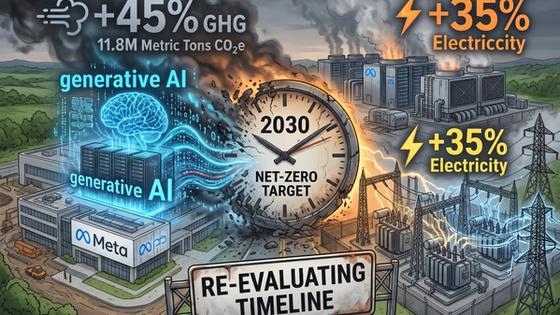
Meta's emissions jumped 45% pushing back net-zero goals
Meta's emissions jumped 45% in a single year as its AI data center buildout accelerated, and the company is now quietly reconsidering its 2030 net-zero pledge.

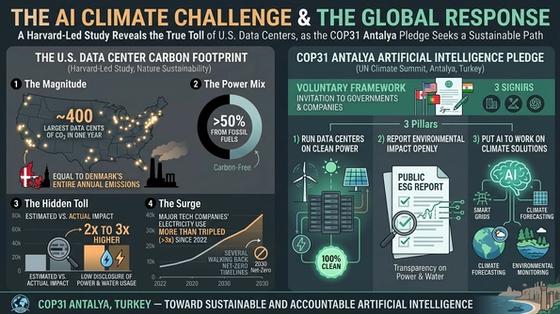
COP31's Antalya Pledge Asks AI Companies to Show Their Climate Math
COP31's new Antalya Pledge asks AI firms to disclose energy and water use and run on clean power. AIforE's take: voluntary pledges need open, verifiable benchmarks behind them to mean anything.
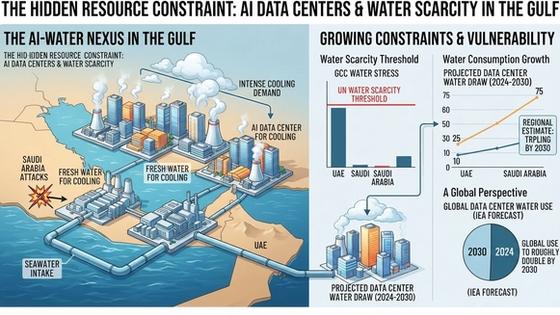
Water Matter for GCC AI-Perhaps More Than Chips
Fresh water, not GPUs, may be the Gulf's toughest constraint on AI data-center growth. AIforE's take: water needs to be a first-class metric in sustainable-AI benchmarks, not an afterthought.

COP31 Launches the Antalya AI Pledge — A First Step Toward Measuring AI's Real Footprint
Turkey's COP31 presidency and the ITU unveiled a voluntary pledge asking AI companies to disclose energy and water use and power data centers with clean electricity — backed by a new global measurement guideline.
AIforE Data Center Resource Ledger: Turbine Permits, a 5 GW Hyperion and Who Pays for Stargate's Power
In its first month, the AIForE Data Center Resource Ledger logged 423 sourced facts on 88 US sites: new turbine permits in SC and MS, a 5 GW Meta Hyperion, and utility terms for Stargate Michigan.
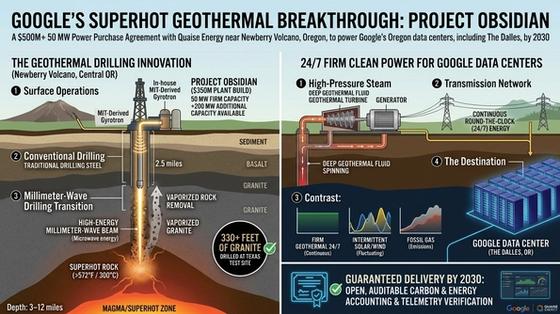
Google Signs Its First Superhot Geothermal Deal to Power Oregon Data Centers
Google will buy 50 MW from Quaise Energy's Project Obsidian in central Oregon, a plant that aims to reach superhot rock with a beam that vaporizes stone. First power is slated for 2030.
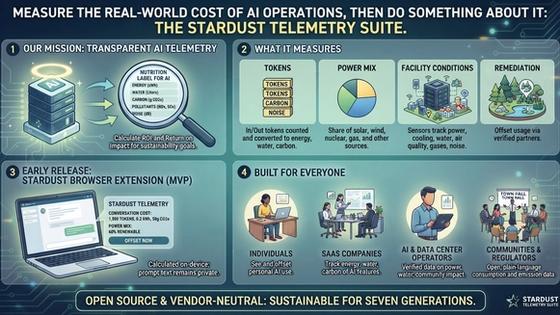
Introducing an AI Lifecycle Telemetry Suite for Efficiency and Sustainability
Stardust measures the energy, water, carbon output, pollutants and noise behind AI operations, from one prompt to a whole data center. Its first component to market is an MVP browser extension.
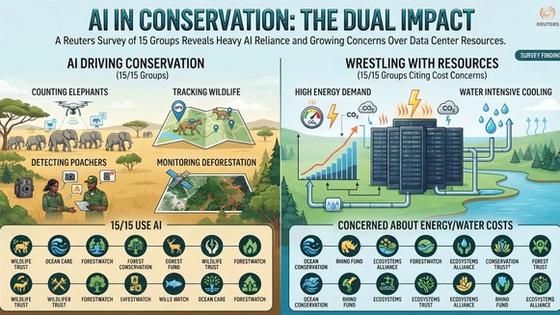
Conservation Groups Lean on AI — While Confronting Its Energy Cost
A Reuters survey of 15 conservation groups found all of them use AI — from counting elephants to flagging wildfires — and all are wrestling with the energy and water costs of the data centers behind it.
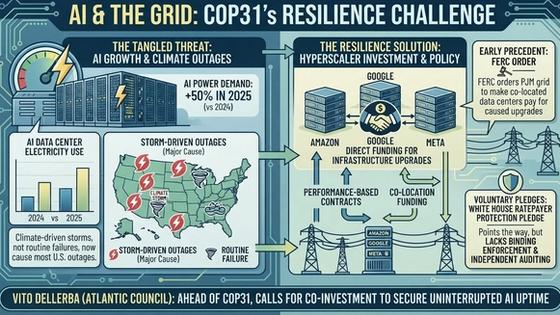
Hyperscalers, Climate Risk, and the Push for Grid Accountability
Days before COP31, new analysis ties AI's 50% jump in data-center electricity use to climate-driven grid stress, and renews the case for real accountability instead of voluntary pledges.
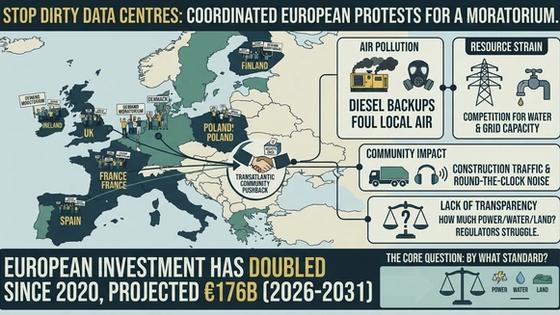
In 15 Countries, Residents Push Back on the Data Center Boom
Over 100 groups across 15 European countries protested Nov. 6-7 for a moratorium on new data centers, citing energy, water, and grid strain.
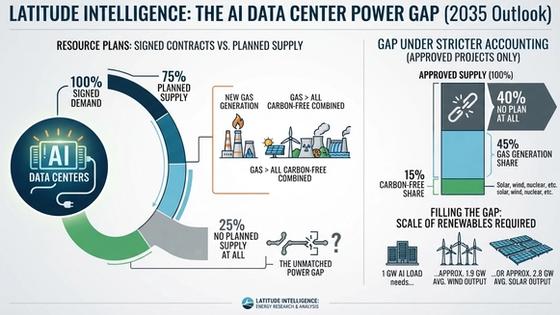
Report: A Quarter of Signed AI Data-Center Power Has No Clean Supply Plan
New research finds utilities plan to cover less than a third of signed AI data-center load with carbon-free power, leaving a growing supply gap mostly filled by gas.
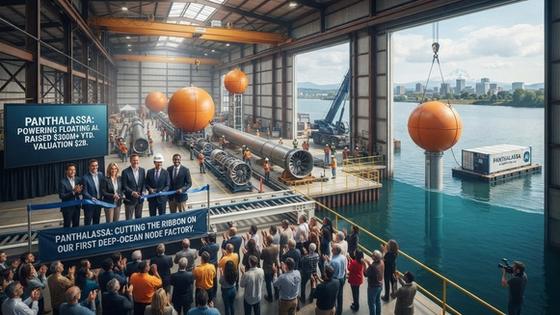
A Wave-Powered Data Center Factory Just Opened in Vancouver, Wash.
Panthalassa opened a Vancouver, Wash. factory to mass-produce ocean 'nodes' that power floating AI data centers with wave energy — though its sustainability claims are still unverified.
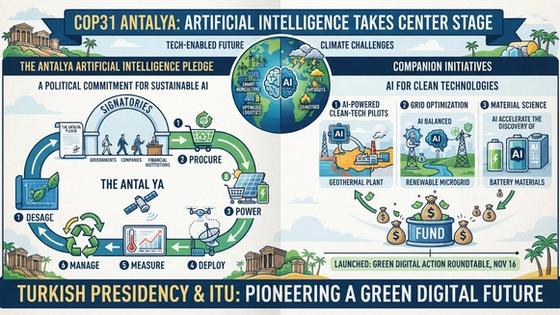
COP31 Opens in Antalya With a First-Ever Pledge on "Climate-Responsible AI"
COP31 opened in Antalya with the first UN climate summit pledge dedicated to AI — asking signatories to disclose data center energy and water use and shift to clean power.

Airsys Benchmark of Power Compute Effectiveness Shows Power to compute
Airsys has introduced a new metric, Power Compute Effectiveness, scoring how much of a data center's provisioned power reaches AI compute — and is sharing the method openly through the Open Compute Project.
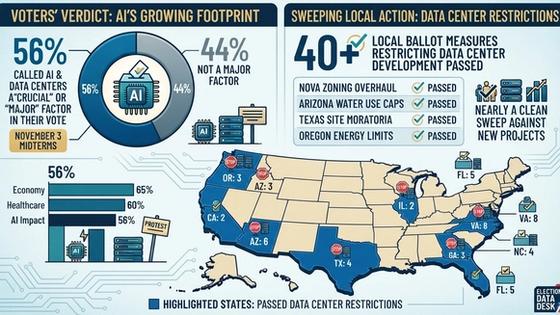
Push for Clean Energy Standards at AI Data Centers after Midterm Elections
Voters restricted data centers in 40+ local votes this month. A new op-ed argues the U.S. needs a clean energy standard for AI data centers — and open ways to verify compliance.
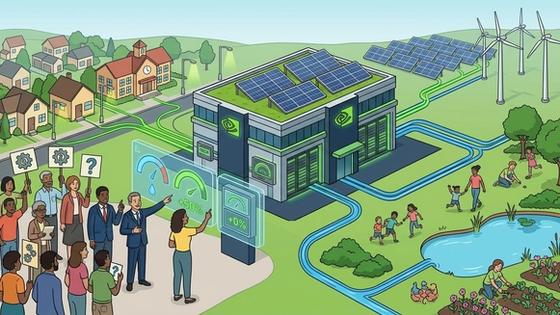
Nvidia at COP31: Data Centers Should Earn Their Place in a Community, Not Just Power Through It
At COP31, Nvidia's sustainability chief argued AI data centers must prove their worth to nearby communities through real water and energy gains, as political backlash over power and water use intensifies.
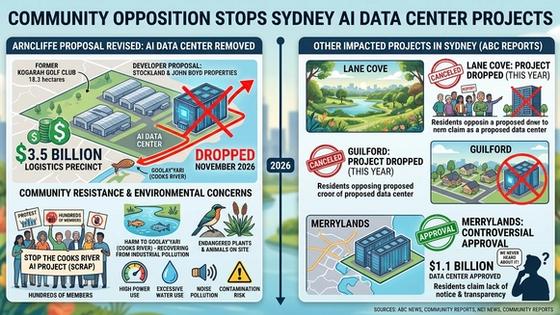
Cooks River Was a Warning, Not a Verdict
Sydney residents stopped an AI data centre on the Cooks River. The lesson isn't that people reject AI. It's that they reject being left out, and there's a better way to build.
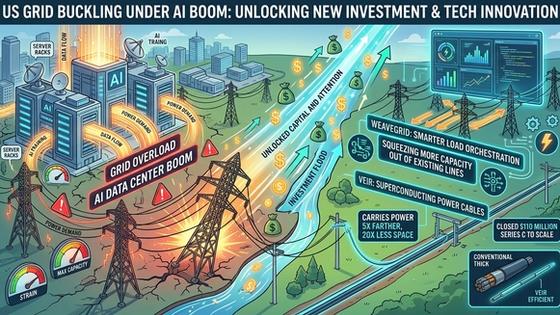
AI's Power Crunch Is Sparking a Grid Modernization Boom
AI's power demand is straining the US grid — and funding a wave of grid-tech innovation. AIforE's take: those efficiency claims need open, independent benchmarks, not just vendor pitch decks.
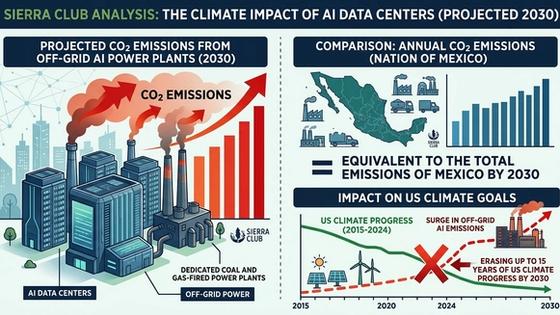
AI's Off-Grid Power Plants Emissions May Setback Progress 15 Years
A new Sierra Club analysis: off-grid power plants built to run AI data centers could emit as much CO2 as Mexico by 2030, erasing up to 15 years of US climate progress.
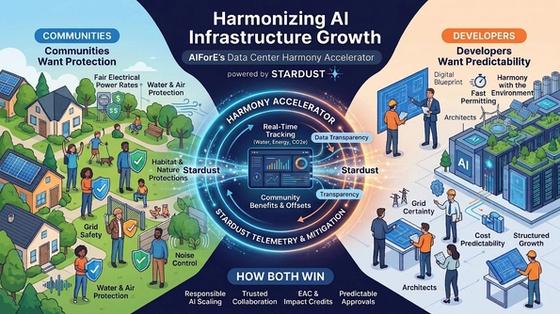
AI Is Here to Stay. Let's Build It in Harmony.
Communities want protection. Data Center Developers want predictability. Aifore's Data Center Harmony Accelerator, powered by Stardust, shows how both can win as AI infrastructure grows.
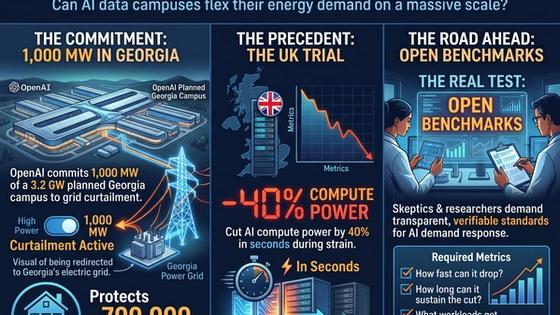
OpenAI's 1,000-Megawatt Pledge Puts Data-Center Demand Response to the Test
OpenAI committed 1,000 MW of a planned Georgia campus to grid curtailment, citing a UK trial that cut AI compute power 40% in seconds. The real test ahead: open benchmarks for claims like these.
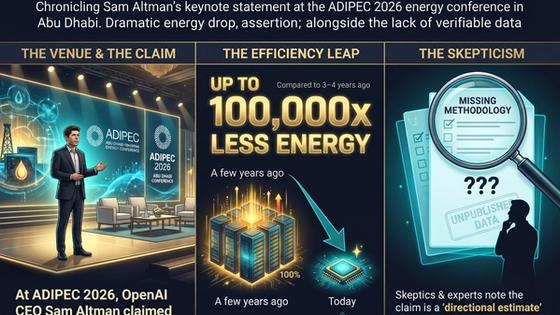
Sam Altman claims his AI is "100,000x More Efficient" But No Benchmark Behind It
At ADIPEC, Sam Altman said AI queries now use up to 100,000x less energy than a few years ago - a directional estimate with no published methodology behind it.
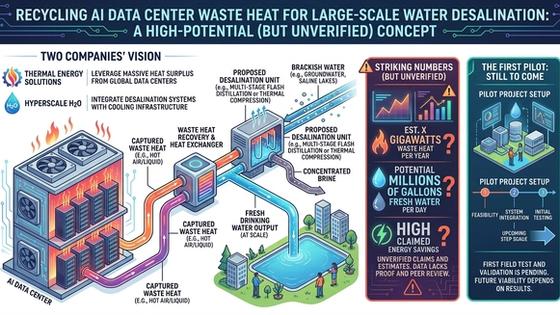
A New Pilot for AI Data Center Heat Recycled To Make Fresh Water?
Two companies say waste heat from AI data centers can turn brackish water into fresh water at scale. The numbers are striking but unverified, and a first pilot is still to come.
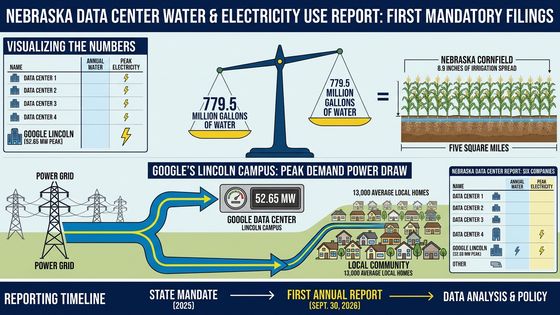
Nebraska's First Data Center Disclosures Show What AI's Footprint Actually Looks Like
Six Nebraska data centers just filed the state's first mandatory water and power report. The numbers offer a rare, comparable glimpse of AI infrastructure's footprint and a preview of what broader transparency standards could look like.
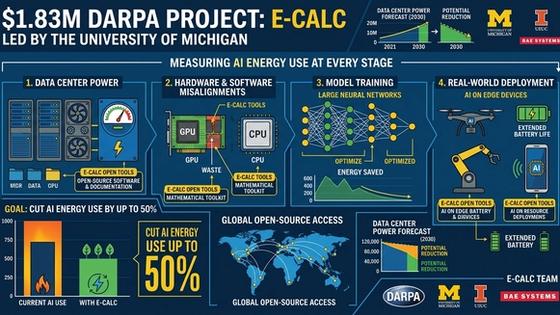
AI's Energy Use measure by Open-Source tools funded by DARPA
A $1.83M DARPA project led by the University of Michigan will build open tools to measure AI energy use at every stage, with a goal of cutting it by up to half.
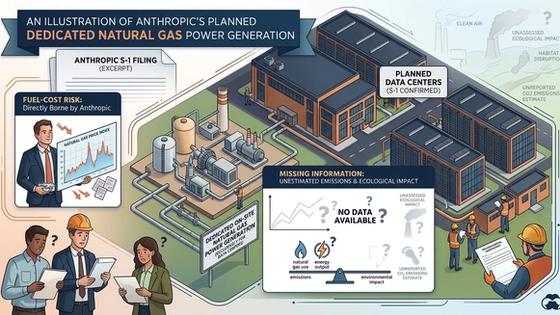
What Anthropic's IPO Filing States About AI and Natural Gas
Anthropic's S-1 confirms some of its planned data centers will run on dedicated on-site natural gas generation, with Anthropic bearing the fuel-cost risk directly — a rare moment of candor about AI's energy mix.
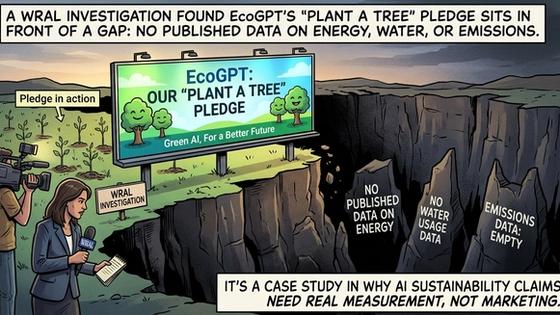
EcoGPT's Tree-Planting needs more Measurement and Sustainability Accountability
A WRAL investigation found EcoGPT's 'plant a tree' pledge sits in front of a gap: no published data on energy, water, or emissions. It's a case study in why AI sustainability claims need real measurement, not marketing.
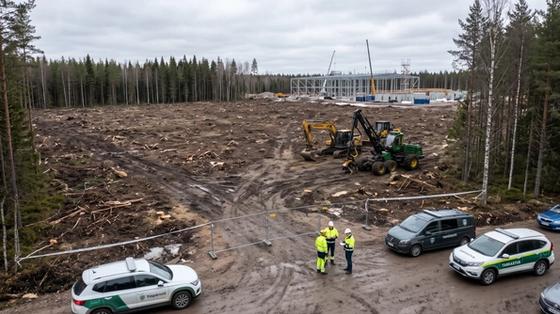
Google Clear-Cut Finland Forests Now AI data Center Project is Stopped
Finnish regulators halted work at two Google AI data center sites after about 250,000 trees were cleared before the required environmental review -- a reminder that AI data centers need the same scrutiny as their carbon footprint.
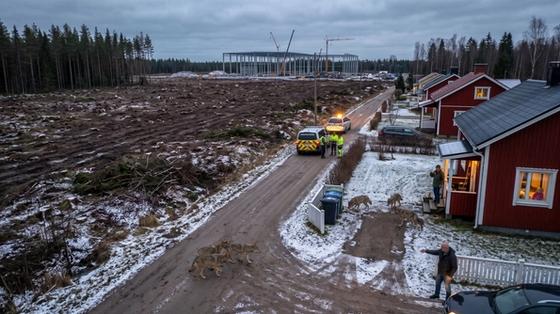
Wolves invade Finnish Villages.Their Forest Home Destroyed for AI Data Centers
Finnish regulators halted Google data center construction after forest clearing drove wolves into nearby villages — a case study in why AI infrastructure needs real environmental standards.
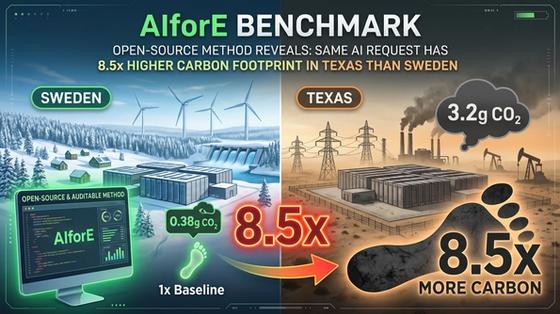
Open-Source Tool Shows the Same AI Query Emits 8x More Carbon in Texas Than Sweden
A new open-source method shows the same AI request can emit 8.5x more carbon in Texas than in Sweden — the kind of open, auditable benchmark AIforE wants to see become standard.
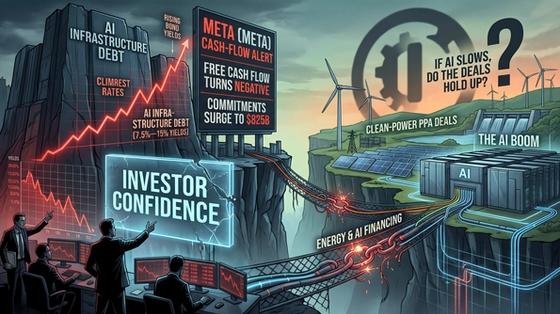
AI's Power Appetite Is Testing Clean Energy's Business Case
Rising bond yields on AI infrastructure debt and Meta's cash-flow warning are rattling investors — and testing whether clean-power deals underpinning the AI boom hold up if it slows.
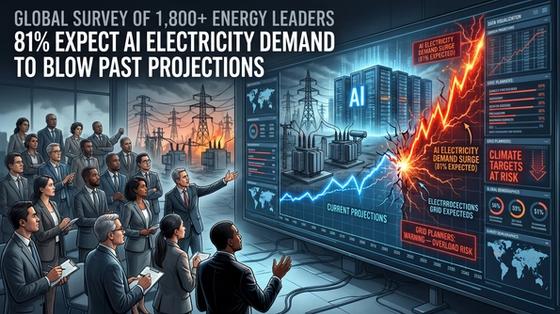
Energy Executives: AI Power Demand Is Already Outrunning the Forecasts
A global survey of 1,800+ energy leaders finds 81% expect AI electricity demand to blow past current projections — a warning sign for grid planners and climate targets alike.
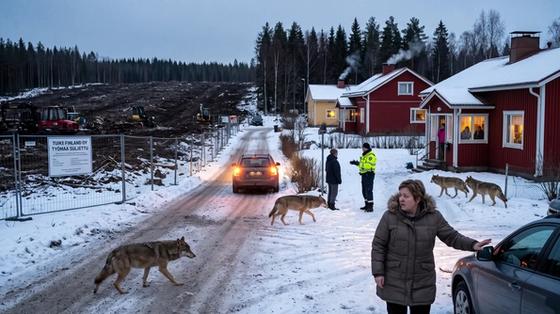
When a Data Center Clears the Forest, the Wildlife Moves First
Google-linked logging of 1,300 acres in Finland pushed wolves into nearby villages — a reminder that AI's footprint isn't just carbon and water. It's habitat too.
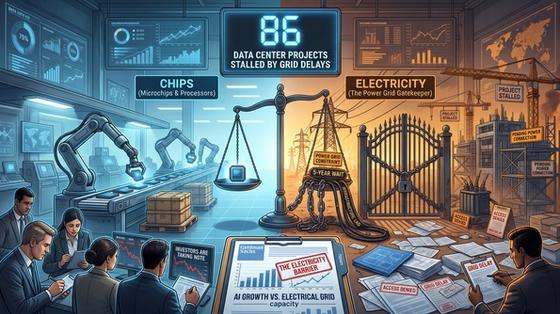
Goldman Sachs: AI's Growth Is Now a Power Problem, Not a Chip Problem
Goldman Sachs: the AI race now hinges on electricity, not chips. Grid delays have already stalled 86 data center projects — and investors are taking note.
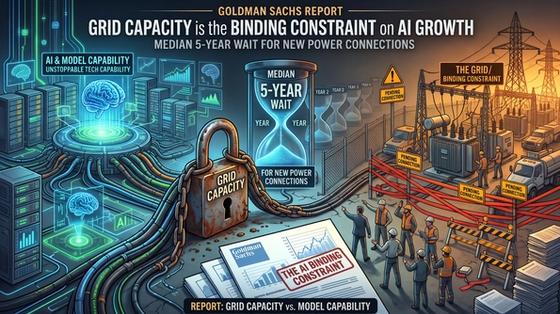
Goldman Sachs: Power, Not Chips, Is Becoming AI's Real Constraint
A new Goldman Sachs report argues grid capacity, not model capability, is now the binding constraint on AI's growth, with a median five-year wait for new power connections.
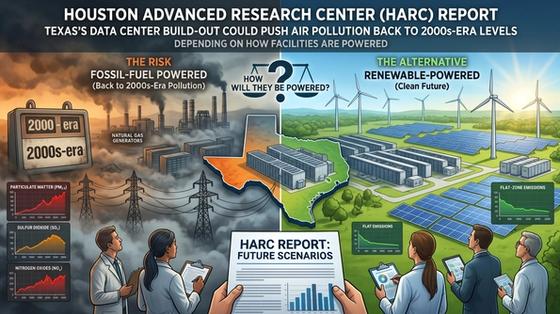
Texas Data Center Boom Could Erase Decades of Air Quality Progress, New Report Warns
A new Houston Advanced Research Center report finds Texas's data center build-out could push air pollution back toward 2000s-era levels, depending on how facilities are powered.
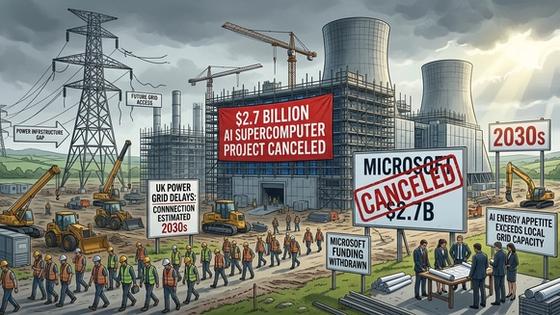
Microsoft Delays UK AI Supercomputer Plan due to Power Grid Inadequacy
Microsoft pulled funding for a $2.7B UK supercomputer after learning grid power won't reach the site until the 2030s — a sharp reminder that AI's energy appetite is now a hard infrastructure limit.
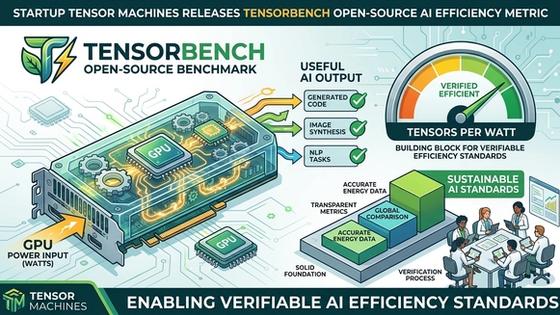
TensorBench Open-Source Benchmark to Measure What AI Compute Actually Costs
Startup Tensor Machines released an open-source benchmark, TensorBench, that measures useful AI output per watt of GPU power — a building block for the verifiable efficiency standards AI sustainability work still lacks.

Senate Bill Proposes Data Centers Pay Their Grid Costs
A bipartisan Senate bill would make large AI data centers pay their full share of grid upgrade costs — and let states go further still.
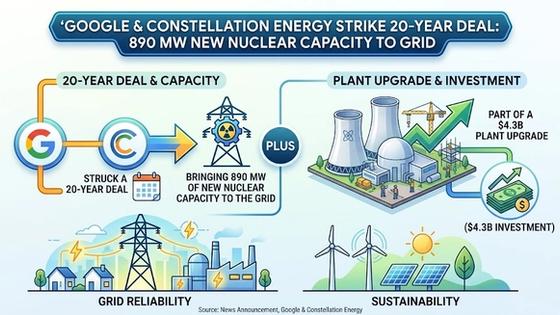
Google's $4.3 Billion Deal for Nuclear Energy Powered AI Data Centers
Google and Constellation Energy struck a 20-year deal bringing 890 MW of new nuclear capacity to the grid, part of a $4.3B plant upgrade — alongside a separate deal to run grid operations on Google's own AI.
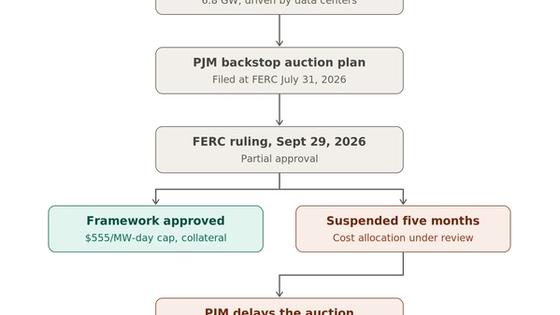
The Federal Energy Regulatory Commission Pauses Emergency Data-Center Power Plan
Regulators accepted PJM's plan to cover a 6.8-gigawatt shortfall driven by AI data centers — then delayed it five months over who pays if things go wrong.
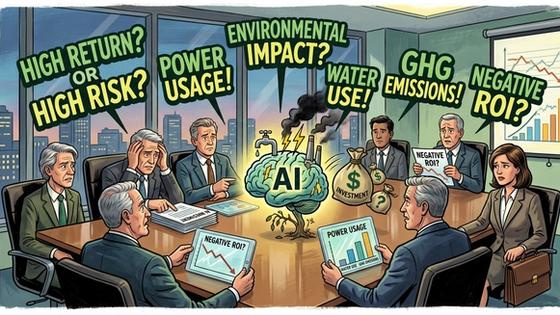
Big Investors Are Frustrated With AI's Climate Footprint
A Morningstar survey of 500+ asset owners managing $20T finds AI-driven energy demand and reliance on carbon offsets are becoming top climate-risk concerns for investors.
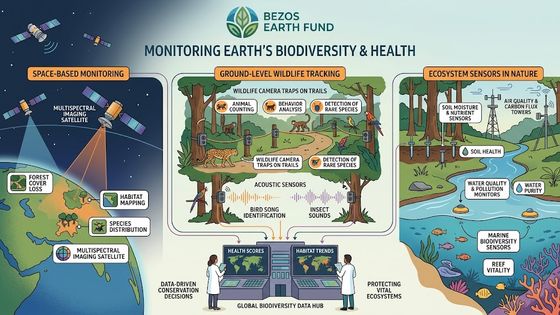
New AI Network Yeilds Biodiversity Health for Amazon
A 24-institution coalition backed by the Bezos Earth Fund launched an AI system fusing satellites, camera traps, and bioacoustics to monitor Amazon biodiversity in near real time.
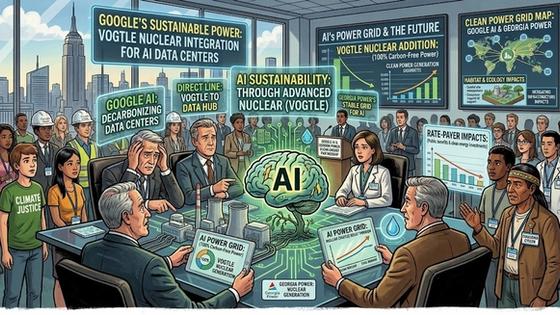
Google plugs into Georgia's Vogtle and Hatch Reactors for AI Buildout
Google aiming to add nuclear capacity to power AI from Georgia's Vogtle and Hatch plants to power its AI data centers, in a deal that still needs state approval.
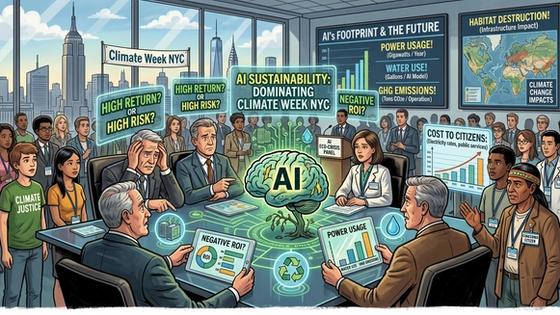
AI Dominates Climate Week In NYC
At UN Climate Week, AI's climate promise collided with its rising energy costs. Investment in AI-adjacent climate tech surged 55% even as data-center emissions climbed, making climate change worse — a gap open benchmarks could help close.
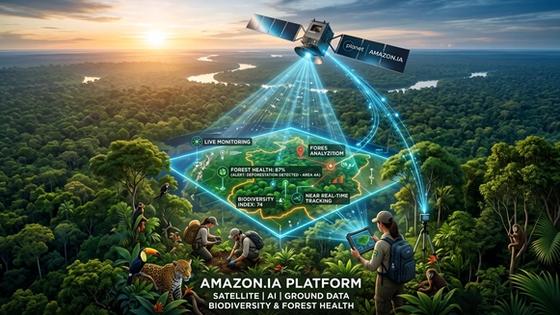
Amazon.ia: Using AI with Satellites to help Rainforest
Planet's new Amazon.ia platform pairs satellite imagery and AI with ground data to track biodiversity and forest health across the Amazon in near real time.

AI's Water Usage Is Growing - Measuring it is top priority
New reporting confirms AI data centers' water use is growing, but so are the tools to measure and cut it. Here's why standardized water metrics matter.
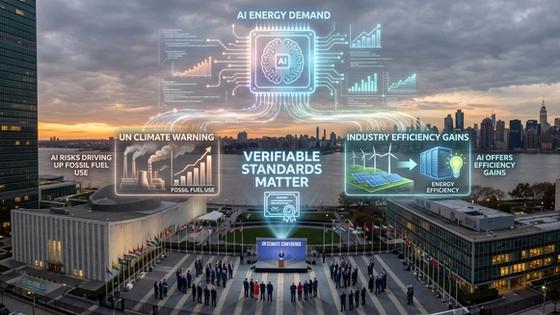
AI's Energy Appetite Is Top Issue at NYC Climate Week
World leaders gathered in New York this week as UN climate officials warned AI's energy demand risks driving up fossil fuel use, while industry pointed to efficiency gains. The debate underscores why verifiable standards matter.
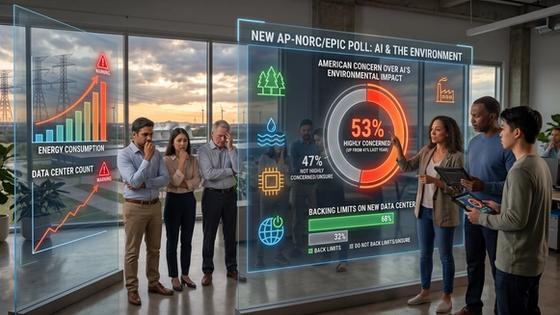
Poll: Most Americans Are Worried About AI's Environmental Toll
A new AP-NORC/EPIC poll finds 53% of Americans are highly concerned about AI's environmental impact, up from 41% last year, with most now backing limits on new data centers.
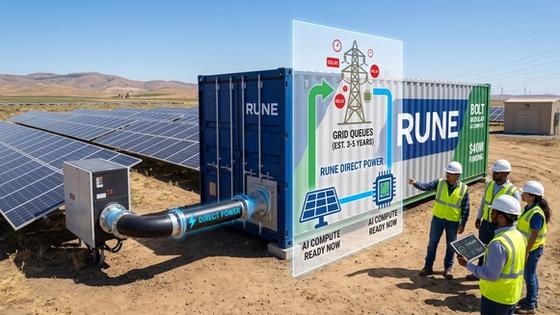
Rune Raises $40M - They Place AI Compute on Solar Farms
Rune raised $40M to bolt modular AI compute directly onto solar farms, skipping years-long grid queues. It's the right-sizing model AIforE wants to see scale.
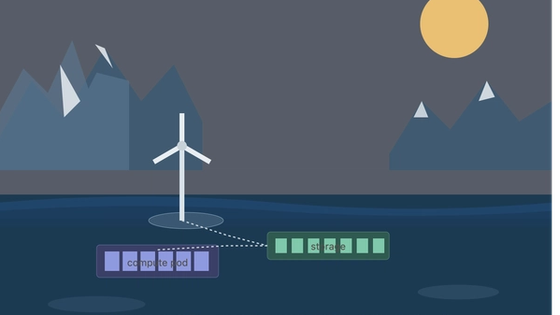
Norway Power Pilot of Offshore Wind to meet Demand Of AI
Exascale Labs and EnergyBank signed an MOU to co-locate modular AI data centers with floating offshore wind and battery storage off Norway, starting at 800kW.
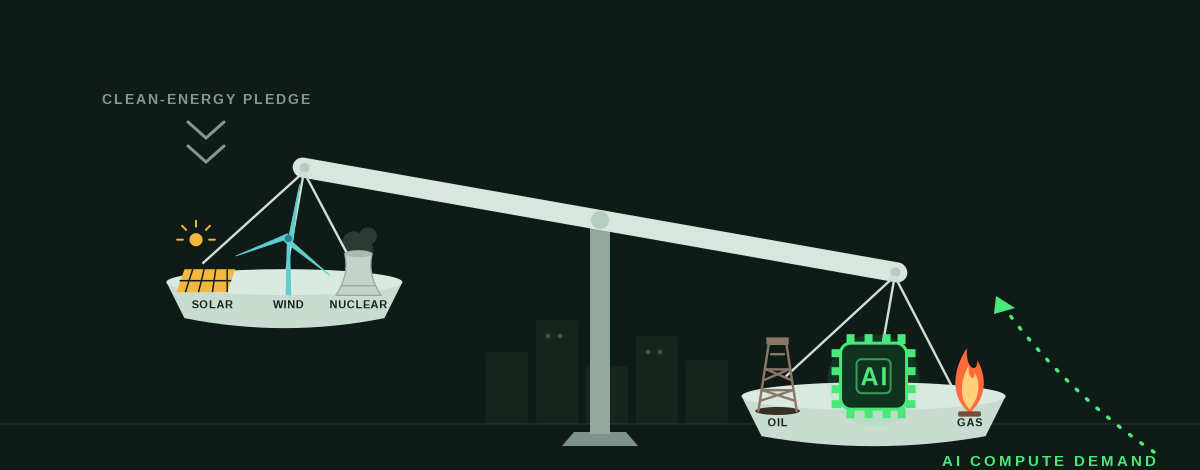
Microsoft AI Projects Power Hungrier AI Future Changes Clean Energy Goals
Bloomberg reports Microsoft may rework its 2030 clean-energy commitment as AI data center growth outpaces its power strategy — a live example of why AI needs sustainability benchmarks.
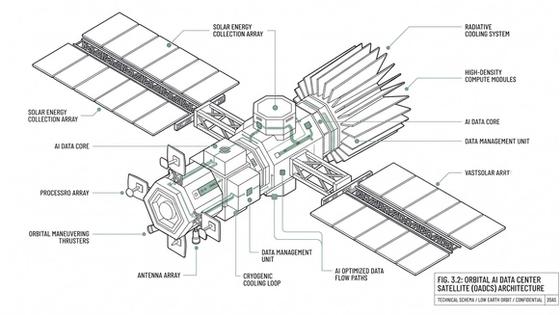
The Thermodynamic Realities of Space-Based AI Data Centers Space Compute Energy Consumption Hardware Architecture
An empirical analysis evaluating space-based AI data centers. We compare continuous solar collection efficiency against vacuum thermal dissipation bottlenecks, launch embodied carbon, and edge inference latency.
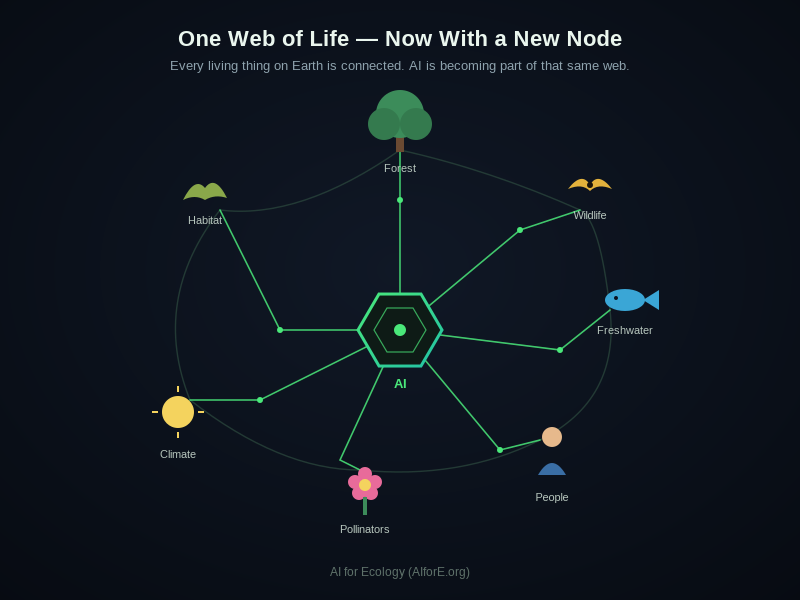
AI Is Becoming a New Species. Let's Plan for Coexistence, Not Collision.
Ecosystem means connection — and AI is already part of ours. What that means for how we build, and what we're at risk of repeating.

AI can help us think through our emotional fog of environmental consequences
Modern ecology suffers from emotional, short-sighted interventions. Humans act on narratives, optics, and immediate panic. AI provides the ultimate logical analysis so that we can base environmental decisions on facts.