Senate Bill Proposes Data Centers Pay Their Grid Costs
A bipartisan Senate bill would make large AI data centers pay their full share of grid upgrade costs — and let states go further still.
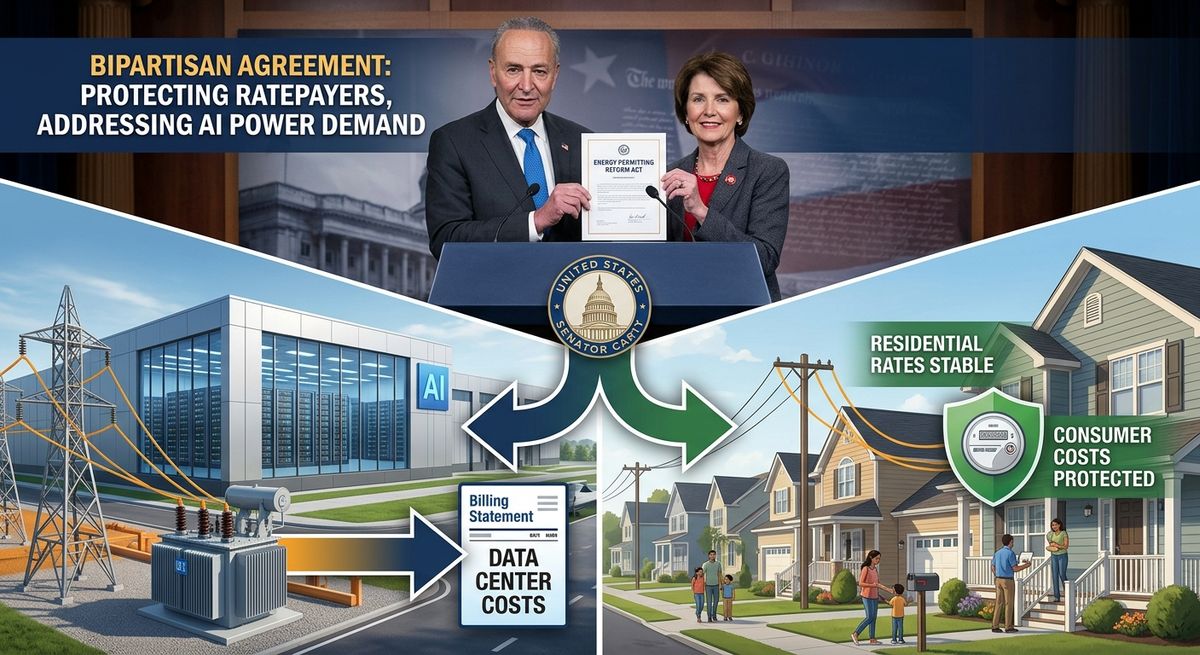
At AI for Ecology we believe sustainability starts with AI providers being fully responsible for their energy, and water consumption. This article from Axios shows regulation heading in the right direction:
Bipartisan senators have introduced energy-permitting legislation that takes direct aim at how AI data centers are billed for the power they draw. The bill would require large facilities — those of at least 20 megawatts — to cover both their share of the existing transmission network and the new transmission built specifically to serve them, reversing a decades-old federal policy that generally barred utilities from charging both at once. Regulators would also be allowed to charge data centers above and beyond those incremental costs, with the surplus used to lower bills for everyone else.
The bill also requires utilities to secure financial guarantees before building new infrastructure for a data center, protects ratepayers if a project falls through, and keeps operators on the hook for stranded costs if they stop buying power early. States would get wide latitude to go even further, including requiring new facilities to line up their own power supply or accept usage limits. Early reaction from industry was muted: the Data Center Coalition said it was still reviewing the text, and most hyperscalers declined to comment.
For AI for Ecology, this bill is a reminder that measurement has to keep pace with policy intent. A rule that tells data centers to "pay their incremental costs" is only as enforceable as the ability to calculate those costs in the first place — which depends on standardized, auditable reporting of a facility's energy draw and grid impact. Open specifications and independent benchmarks are what turn a well-meaning mandate into something regulators, utilities, and the public can actually verify. We'll be watching whether this bill's disclosure requirements are strong enough to make it stick.
Source: Axios