Meta's emissions jumped 45% pushing back net-zero goals
Meta's emissions jumped 45% in a single year as its AI data center buildout accelerated, and the company is now quietly reconsidering its 2030 net-zero pledge.
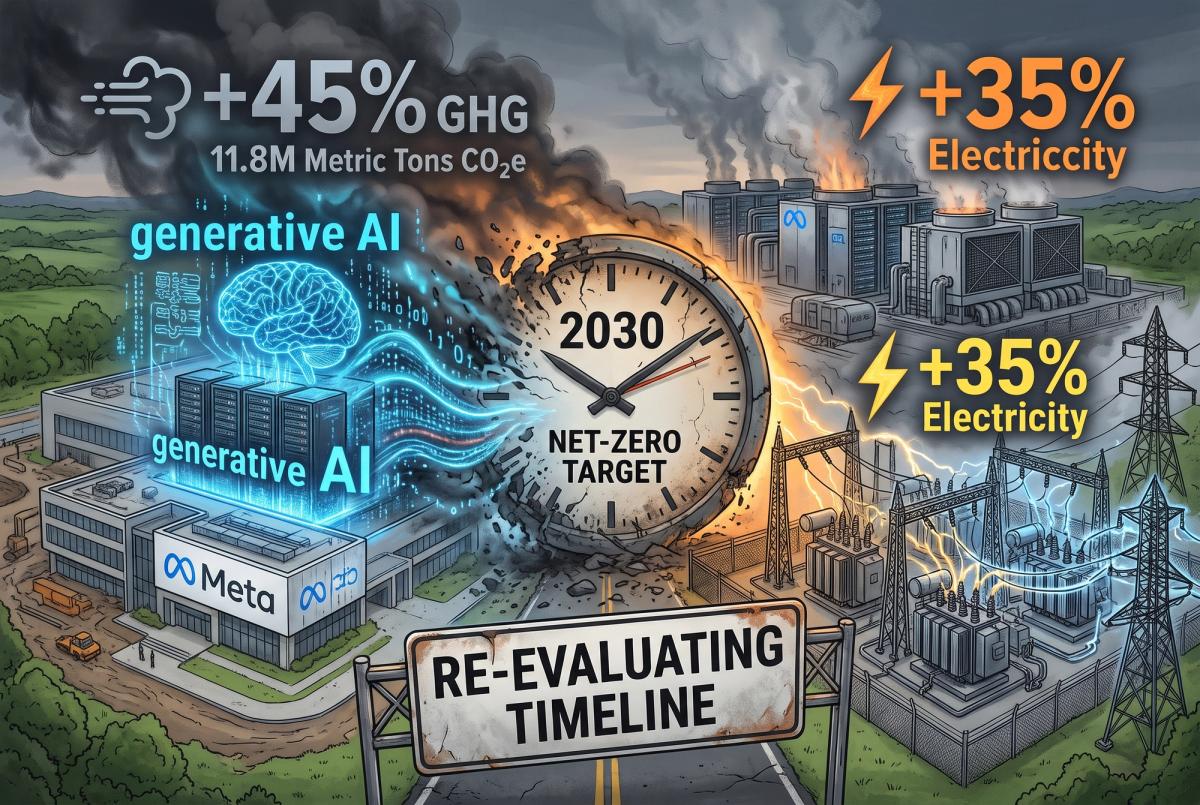
Meta's newly released 2026 sustainability report shows its net greenhouse gas emissions rose 45% in 2025, to roughly 11.8 million metric tons of CO2-equivalent, while electricity use climbed about 35%. Company executives now say they are "re-evaluating" the timelines behind their 2030 net-zero goal — a target first set in 2020, before the generative AI boom reshaped the company's infrastructure needs.
Meta isn't alone. Sustainability leads at Amazon, Google, and Microsoft have each pointed to AI data center expansion as the primary driver of their own rising footprints in recent reports. Most of Meta's increase traces back to purchased goods and capital equipment tied to new data centers rather than day-to-day operations — the embodied, upstream emissions from chips, concrete, and steel that are hardest for any single company to control, and easiest for a self-reported "net-zero" claim to quietly leave out.
Much of Big Tech's climate progress to date has also leaned on market-based accounting: renewable energy certificates and offsets that can make a data center's annual ledger look clean even when its actual, hour-by-hour electricity draw is anything but.
Why it matters for AIforE: this is the credibility gap our certification work exists to close. Without an independent, lifecycle-based standard that separates real-time physical power draw from paper credits, "net-zero" ends up meaning whatever accounting a company chooses that quarter. AIforE's push toward open specifications and third-party verification aims to turn one-off, self-graded disclosures like this one into numbers that investors, regulators, and communities can actually compare and trust.
Source: Axios, reporting on Meta's 2026 Sustainability Report