Hawaii to Georgia, Communities Fight Data Centers - Harmony is Needed Now
Six U.S. communities took action against AI data center projects this week - bans, a rejected tower, and a $17B project facing a repeal vote. AIforE's take: these fights need shared, verifiable numbers, not standoffs.

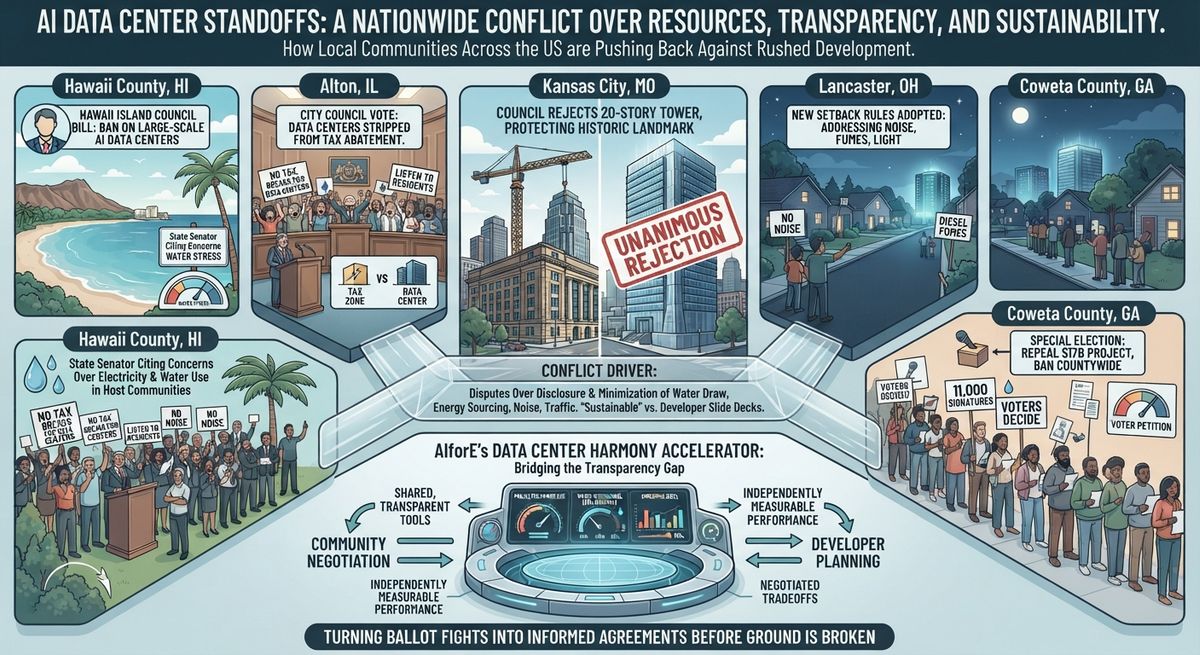
Local fights over AI data centers reached ballot boxes and council chambers across the country this week. Hawaii County's council will consider a bill banning large-scale AI data centers on Hawaii Island, with a state senator citing nationwide concern over electricity and water use in host communities. In Alton, Illinois, the city council voted to strip data centers from a tax-abatement zone and adopted new public-comment rules after residents turned out in force against a proposed facility. Kansas City's council unanimously rejected a 20-story downtown data-center tower that would have required demolishing a 126-year-old historic building. Lancaster, Ohio adopted new setback rules after residents described noise, diesel fumes, and bright lights from a nearby facility. And in Coweta County, Georgia, more than 11,000 verified voter signatures forced a January special election on whether to repeal approval of a $17 billion data-center project and ban the facilities countywide.
None of these fights are really arguments against technology itself. They're disputes over whether a given project's water draw, energy sourcing, noise, and traffic impacts are being honestly disclosed and genuinely minimized, or whether "sustainable" is simply a word on a developer's slide deck.
AIforE's take: this is precisely the gap AIforE's Data Center Harmony Accelerator is built to close. Developers and communities don't need another standoff; they need shared, transparent tools that put the same numbers on power, water, and emissions in front of both sides before ground is ever broken. When a project's environmental performance is independently measurable, communities and developers can negotiate real tradeoffs. When it isn't, every proposal turns into another ballot fight.
Source: Strisker Data Centers Daily Notes