The Federal Energy Regulatory Commission Pauses Emergency Data-Center Power Plan
Regulators accepted PJM's plan to cover a 6.8-gigawatt shortfall driven by AI data centers — then delayed it five months over who pays if things go wrong.
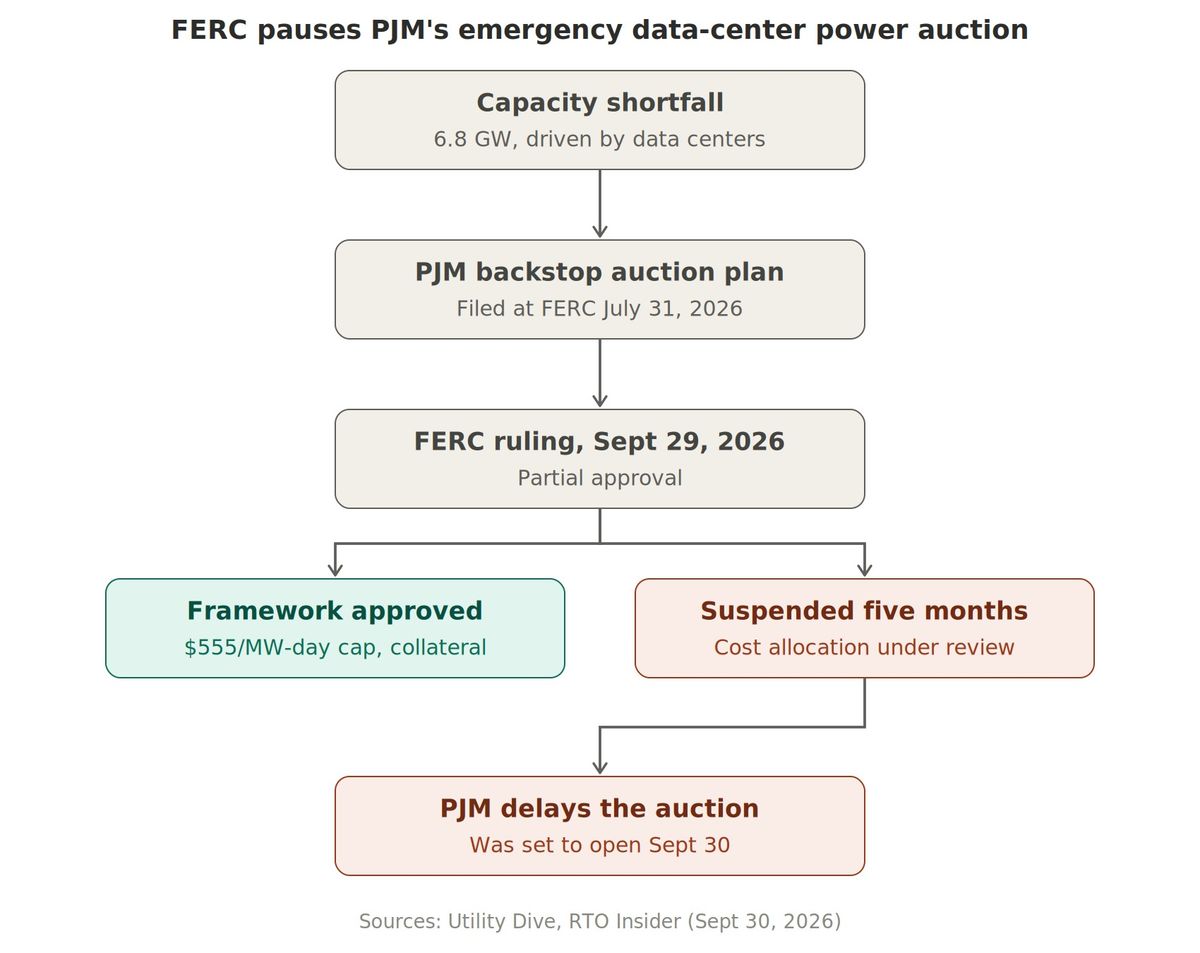
The Federal Energy Regulatory Commission has accepted, but not yet activated, a one-time capacity auction that grid operator PJM Interconnection proposed to close a 6.8-gigawatt power shortfall — a gap driven largely by surging demand from AI data centers across the mid-Atlantic. Implementation is paused until February 28, 2027, while PJM works out the details FERC says it can't yet sign off on.
FERC Chair Laura Swett said the commission would not wave through "a deeply flawed, 11th-hour procurement mechanism with billion-dollar implications" without answers on cost allocation, collateral requirements, and exit rules. The core dispute: if a data-center developer walks away from a power commitment, who eats the cost — the developer, or every other ratepayer on the PJM grid? Commissioner Lindsay See put it plainly: existing customers shouldn't be left holding costs created by new demand.
This is a governance problem as much as an energy one, and it's the kind AIforE exists to help solve. Regulators are negotiating cost allocation case by case because there's no shared, auditable way to measure and attribute how much power an AI buildout actually draws and when. Open specifications and standardized reporting for AI's energy and grid footprint would give utilities, regulators, and developers a common baseline — instead of five-month standoffs every time a new gigawatt of AI demand shows up.
Source: Bloomberg